
Verified St. Johns County City Directories
Two digitized St. Augustine city directory volumes are verified, while the local archive and library hold broader sources that must be checked by target year. The St. Augustine Historical Society Research Library is the specialist repository. Its closed stacks hold street files, biographical cards, family files, court and probate records, maps, church material, newspapers, and manuscripts. St. Johns County Public Library System adds a catalog, in-branch Ancestry Library Edition, ArchiveGrid, and Gale Directory Library.
| Collection | Years | Where Held | Access |
|---|---|---|---|
| Chapin & Co., The St. Augustine Directory | 1880 | University of Florida scan on Internet Archive | Free scan and OCR |
| History, guide and directory of Saint Augustine | 1904 | Library of Congress-contributed scan | Free digitized volume |
| Biographical and family files | Sixteenth century to present | St. Augustine Historical Society | Appointment; staff retrieval |
| Court and probate archive | 1821 to early 1950s | St. Augustine Historical Society | Closed stacks by appointment |
| St. Augustine Sanborn maps | 1884 to 1946, nine editions | Library of Congress | Free online images |
| Cataloged directories and yearbooks | Exact run unverified | SJCPLS and Historical Society | Catalog search and staff inquiry |
Do not turn the two known dates into a complete run. Exact Polk, reverse, telephone-book, yearbook, obituary-index, and last-print years were not published in the accessible catalogs. Ask staff for a city, telephone, or criss-cross directory in a specific year, with surname and street variants. That narrow request is more likely to locate a shelf item than asking for every local directory.
The 1880 St. Augustine Directory
Chapin & Co.'s 1880 volume is the best documented early St. Johns County city directory. It includes residents, businesses, institutions, and streets. The Internet Archive item identifier says “1885,” but its catalog metadata and title-page OCR identify the work as 1880. Cite the title-page year and disclose the mismatch when preserving a research note.
The digitized St. Augustine directory search is a convenient way to locate scans, but each item's title page and provenance must be checked.
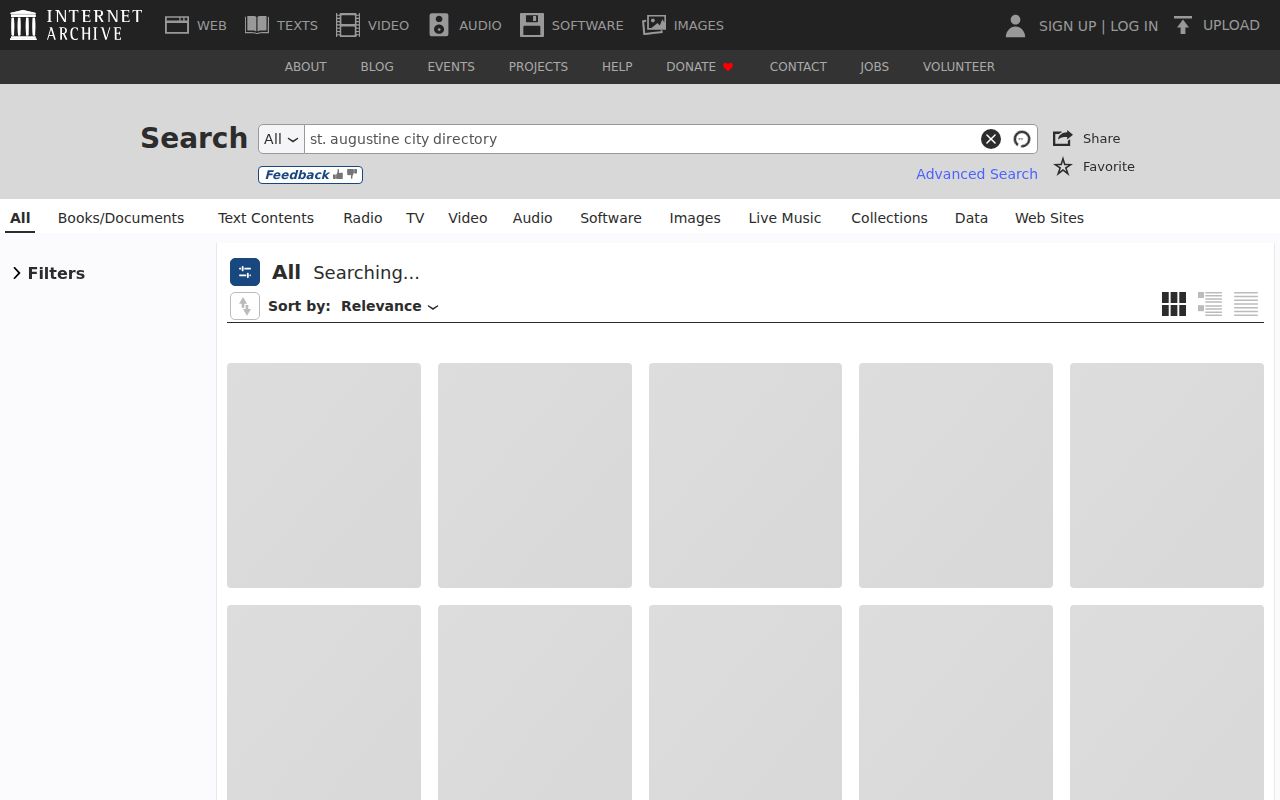
The result list is an entry point, not evidence that every labeled year is correct or that the county has a continuous series.
Entries often describe location by street, corner, or proximity. They can distinguish “house” from “boards,” which separates a stated home from lodging at a hotel or another address. Occupation, employer, and workplace may also appear. The book identifies institutions and two weekly newspapers, offering more context than a bare name list.
St. Johns County City Directory in 1904
The 1904 History, guide and directory of Saint Augustine supplies a second verified time point. It was contributed by the Library of Congress and can be read as a digitized guide-directory. Compare its name and place entries with the 1880 volume, but do not assume identical editorial rules. A person absent from one edition may have moved, died, been omitted, or appeared under another spelling.
That gap of more than two decades makes companion records essential. The 1880 federal census can test household composition near the first volume. Florida's 1885 census and local church or newspaper sources help after the national 1890 federal census loss. The next known directory does not, by itself, explain the years between.
St. Johns County Directory Archives
The St. Augustine Historical Society Research Library at 6 Artillery Lane is open to the public by appointment Tuesday through Friday, 9:00 a.m. to 4:30 p.m. Call 904-825-2333. Staff retrieve closed-stack material, and offsite items require two business days' notice. Give a surname, street, and target span before the visit.
The Emily catalog indexes books, manuscript aids, maps, photos, the East Florida Gazette, and El Escribano.
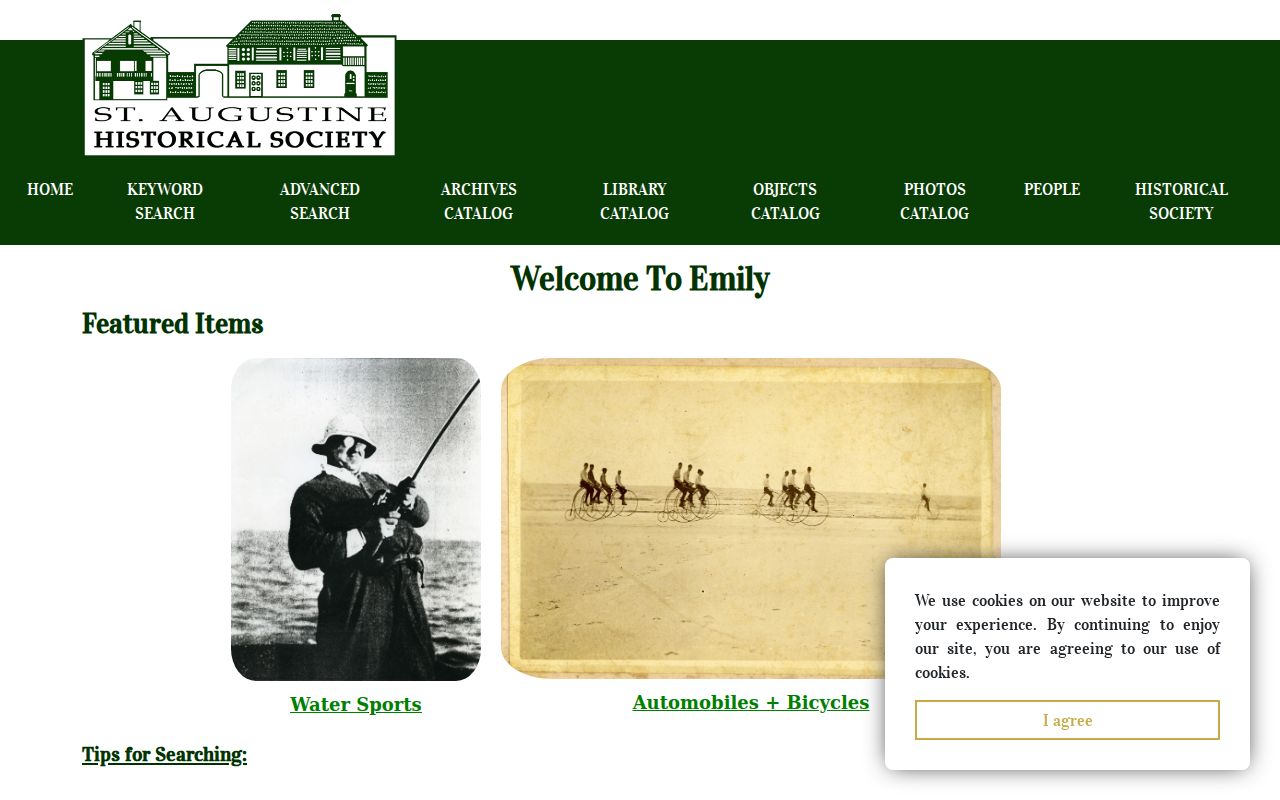
Catalog terms can identify a collection before staff pull its folder, map, card, or volume.
Alphabetical biographical cards abstract newspapers, church records, and city directories. Family files add obituaries, charts, booklets, and correspondence. Exact-street files contain clippings, reports, and maps, making them especially useful when an old entry says “near” a landmark rather than listing a house number.
Read a St. Johns County City Directory
The 1880 entry style compresses facts into a short line. Copy the line exactly before interpreting it, then consult the volume's own abbreviation key. Publisher practices differ, so familiar symbols from a later directory should never be imposed on this one.
| Surname and given name | The alphabetical identity line, sometimes with a title |
|---|---|
| Occupation or office | Trade, public office, or role stated by the publisher |
| Employer or firm | A business link, sometimes shown in parentheses |
| Workplace | A business street or named site |
| House or boards | A home clue or a stated boarding place |
| Location wording | Street, district, “near,” or “corner,” often without a number |
- Criss-cross directory
- A later address-first format that lists entries by street and number. Its exact St. Johns County years still need staff confirmation.
- Householder index
- An address-order list of named household heads or adults, not a census of every person at the site.
- Abbreviation key
- The publisher's legend for shortened words and symbols. Save it with every extracted entry.
A physician or carpenter may have both a work and house reference. Do not treat the business address as the residence. “Boards” reports lodging, while “house” signals the residence wording used by that edition. Neither phrase proves ownership.
Map St. Johns County Directory Streets
Nine Library of Congress Sanborn editions cover St. Augustine in 1884, 1893, 1899, 1904, 1910, 1917, 1924, 1930, and 1946. They show footprints, building use, construction, and period street labels. Hastings has separate 1921 and 1930 sets. A Sanborn sheet can turn “house on King near” into a plausible block without inventing a modern number.
Historical Society street files add local clippings and maps. This is a strong geographic layer for Old City, Lincolnville, Spanish Quarter, Model Land, and Uptown. Anastasia Island and later areas may depend more on plats, permits, and aerials. Modern address-keyed work belongs on the St. Johns County street directory page.
Note: No authoritative countywide street-renumbering year was found, so bridge old and new locations through maps, plats, and legal descriptions.
St. Johns Genealogy Companions
Directory evidence becomes stronger when another record answers a different question. Federal census schedules are public through 1950. Church sources at the Historical Society include Cathedral Parish translations and Spanish or Latin originals, Trinity Episcopal microfilm, and Memorial Presbyterian manuscripts. Court and probate holdings from 1821 to the early 1950s can identify estates, administrators, and heirs.
The St. Johns County Public Library System provides Ancestry Library Edition only inside branches, plus ArchiveGrid and Gale Directory Library. The State Archives genealogy collections extend the search through government series, maps, manuscripts, and photographs.
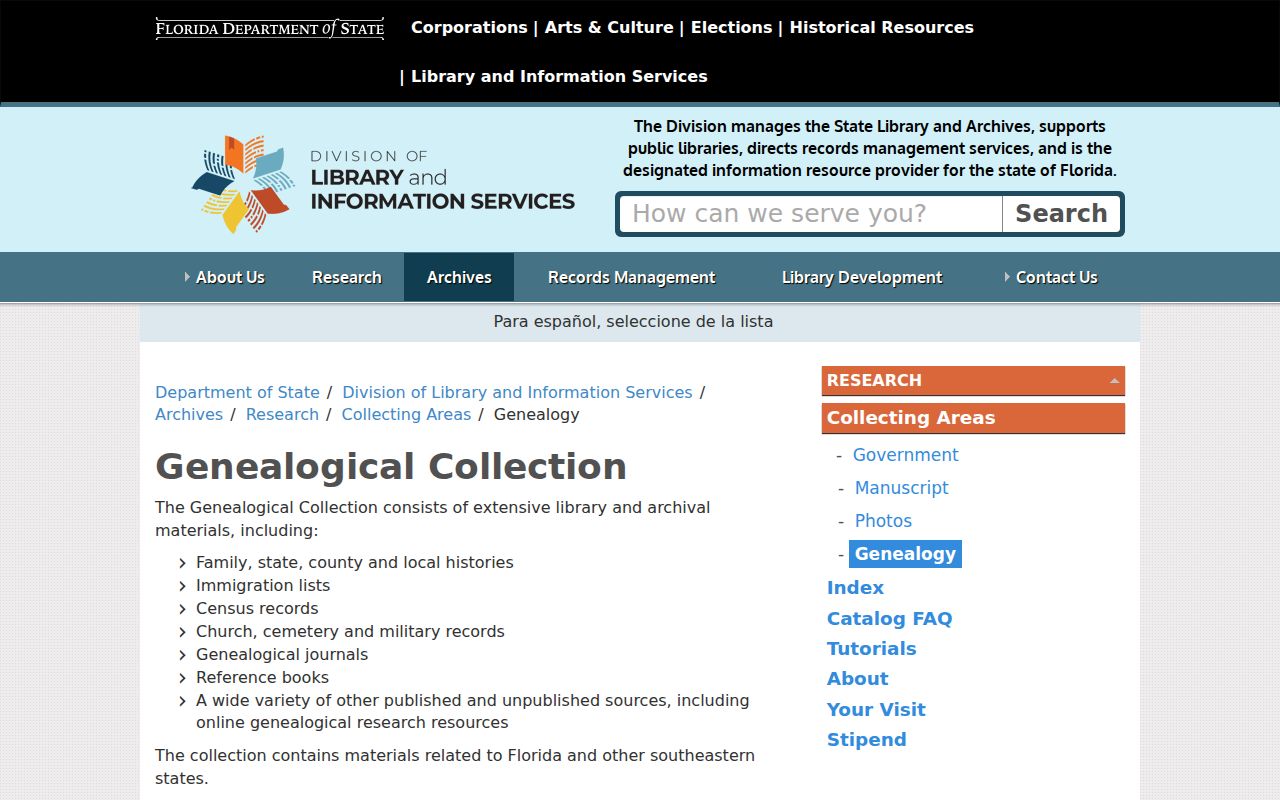
The state collection can fill gaps where a St. Johns County city directory stops, but a finding aid is not a certified vital or court record.
St. Johns Record Timeline
St. Augustine's layers explain why the historical trail is spread among church, colonial, court, directory, census, and map sources. Use dates to choose the right keeper.
| 1513-1821 | Historical Society copies provide colonial official-record context. |
|---|---|
| 1594 forward | Translated church records begin the local sacramental trail. |
| 1821 forward | Verified St. Johns court holdings begin. |
| 1880 | Chapin city directory and federal census can be paired. |
| 1884 | The verified St. Augustine Sanborn sequence begins. |
| 1904 | The second verified digitized guide-directory appears. |
| 1950 | Latest federal census currently public under the 72-year rule. |
The 1890 federal census was largely destroyed nationwide. That loss raises the value of Florida's 1885 census, local directories, newspapers, church records, and maps during the gap.
Trace St. Johns County City Directories
Begin with one verified name, place, or event and preserve spelling variants. Spanish names, initials, translated church entries, and OCR errors can split one family across indexes. Track each conclusion back to the exact image, card, or file.
- Search the 1880 or 1904 city directory by surname and variants. Record the entry, page, edition, occupation, employer, and exact location wording.
- Compare the closest census schedule. Use household members, ages, birthplaces, and occupation only as separate anchors, not automatic identity proof.
- Place the street clue on the nearest Sanborn edition or in a Historical Society street file. Keep uncertain blocks labeled as uncertain.
- Ask SJCPLS and Historical Society staff for editions between the verified years and after 1904. Name the target year and request city, telephone, and reverse formats.
- Close the trail with church, newspaper, death, obituary, probate, or court evidence. Use a certified source when legal proof is required.
Disappearance from a directory proves only absence from that edition. Check later volumes, death and probate evidence, another city, and spelling changes. A boarding notation can also mark a short stay. This cautious method serves family history, reunion research, heir work, and study of St. Johns County communities without forcing a source to say more than it does.